
Common Well Pump Problems in Massachusetts
No water? Short-cycling? Sputtering pressure? Use this homeowner guide to diagnose the four most common well pump problems in Massachusetts — and know when it’s time to call a professional.
Four Problems That Cover Most Well Pump Calls
In Massachusetts, most well pump troubleshooting comes down to four recurring problems: complete loss of water, short-cycling, the pump running constantly, or dirty and sandy water. Regional factors — deep bedrock wells, seasonal drought, and harsh winter freezing — shape which issues you’re most likely to see.
This guide walks you through what each problem looks like, what usually causes it, and the safe checks you can do yourself before calling a professional. When the fix goes beyond a breaker reset or an air-charge test, our team is one call away.
Get Expert Help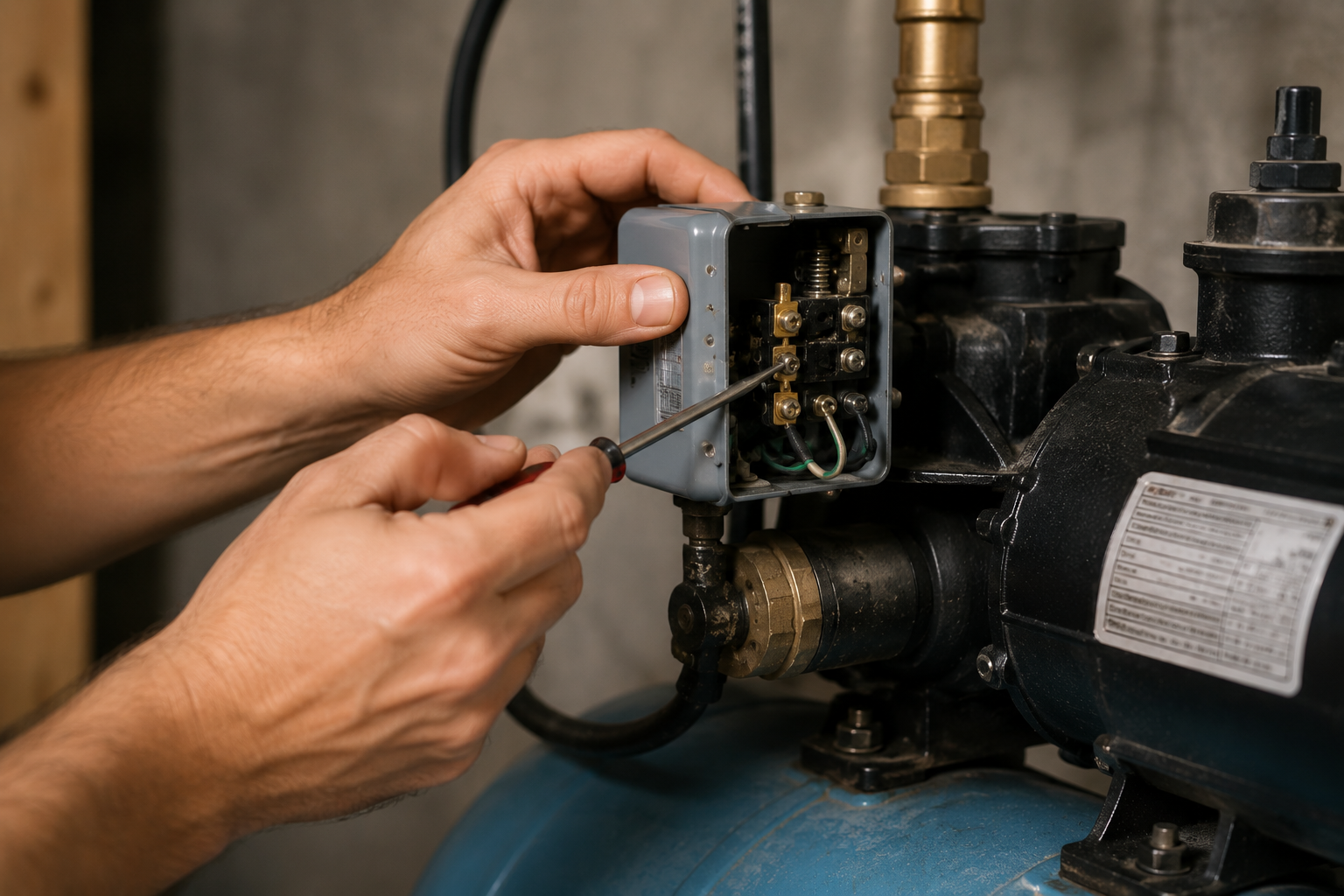
The Four Most Common Well Pump Problems
Each problem has telltale signs and a short set of checks you can do safely from your basement or utility room. If the checks don’t restore water, the issue likely requires professional tools.
No Water at All
Taps are completely dry — usually an electrical or pressure switch issue, not the pump itself.
- Check the breaker: Look for a tripped double-pole well pump breaker. Reset it once. If it trips again immediately, stop — you likely have a grounded motor or shorted wire.
- Inspect the pressure switch: On or near the pressure tank. Remove the cover and look at the electrical contacts. If they’re severely pitted, burnt, or fouled by insects, the switch needs replacement.
- Try the low-pressure cutoff: Many MA systems have switches with a silver lever. If pressure dropped below 10–15 PSI it engages. Hold the lever up manually for about 30 seconds to prime.
Short-Cycling (Rapid On/Off)
The pump turns on and off every few seconds. The pressure tank is the primary suspect — and left unchecked, this will destroy the motor.
- Waterlogged pressure tank: The air bladder can rupture, letting water fill the whole tank. Turn off the pump, drain it, and press the air valve on top. If water spits out, the tank is waterlogged and must be replaced.
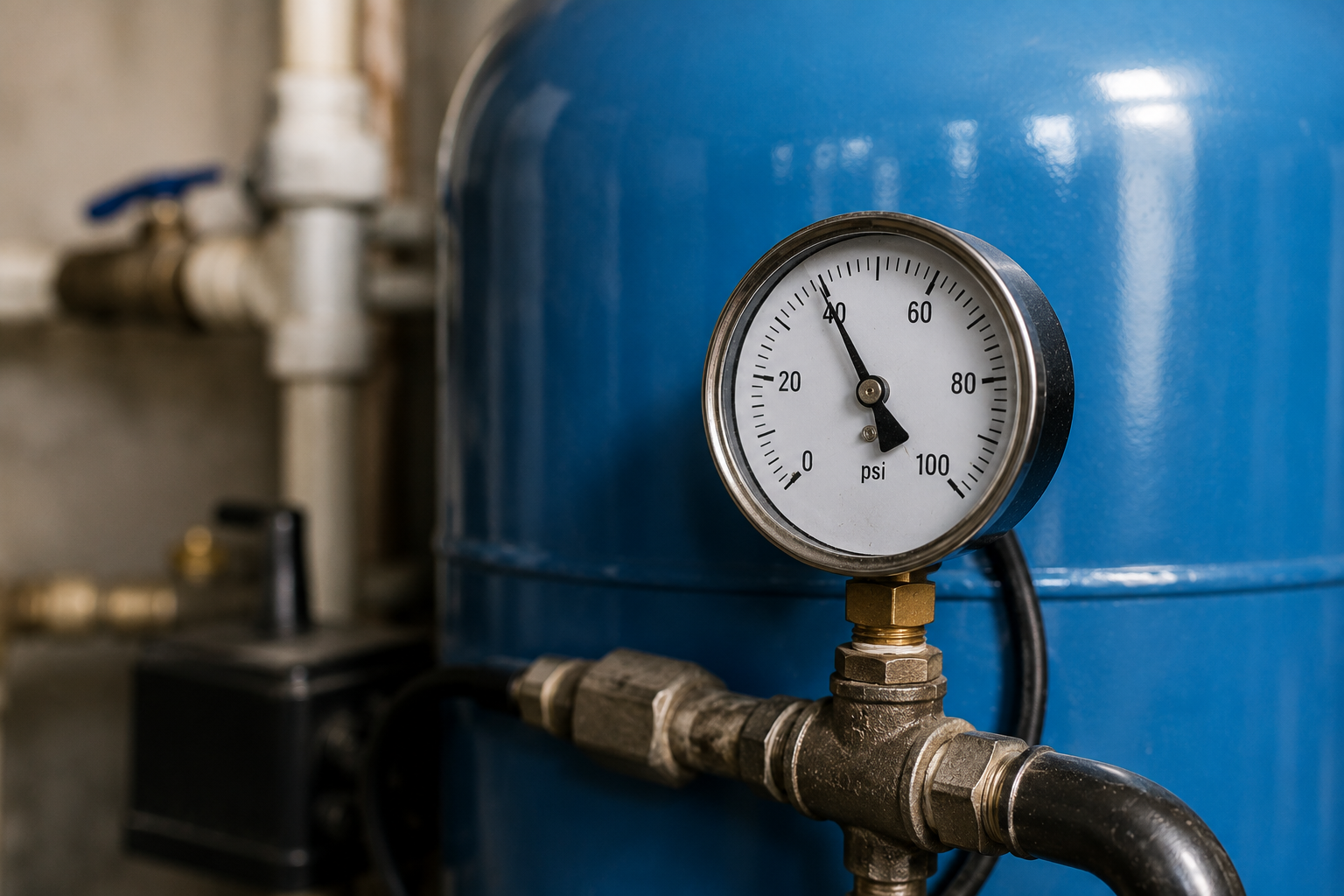
- Test air pressure: If no water comes out, check with a tire gauge. It should sit 2 PSI below the switch’s cut-in pressure (e.g., 28 PSI for a 30/50 switch).
- Faulty pressure switch: A worn or fouled switch can also cause rapid cycling — often requires replacement.
Pump Running Constantly
The pump runs non-stop without building pressure to shut off. Usually a system leak or a drop in the water table.
- Check for leaks: Broken underground pipes, running toilets, or leaking outdoor spigots can all bleed the system.
- Low well yield: MA experiences periodic dry spells and seasonal drawdowns. If the well can’t keep up, the pump runs continuously trying to fill the tank — drawing air and sputtering.
- Failing check valve: A stuck-open valve lets water flow back into the well, forcing the pump to run without ever satisfying pressure.
Dirty or Sandy Water
Sudden cloudiness, grit, or sediment at the tap. Common in older MA wells and after heavy rain events.
- Pump set too deep: The pump may be resting too close to the bottom of the well and drawing in sediment. A professional can adjust the depth.
- Failing well screen or casing: A damaged screen or compromised casing can let sand and surface runoff into the well.
- Clogged sediment filter: Iron and manganese are common in MA groundwater — your whole-house filter may need replacement.
Ran the checks and still no water?
Skip the guesswork. Our team diagnoses and repairs most issues in a single visit.
Regional Factors That Affect Well Pump Performance
Well pump problems in Massachusetts don’t always match the generic advice you’ll find online. Our geology, groundwater chemistry, and climate all play a role in what goes wrong — and how to fix it.
- Deep Bedrock WellsMany MA homes rely on deep bedrock wells prone to iron, manganese, and sediment. A drop in pressure often means your whole-house sediment filter is completely clogged.
- Seasonal Drought & DrawdownSummer dry spells lower the water table. Wells that ran fine in May can start sputtering in August — often requiring the pump intake to be lowered.
- Winter FreezingShallow or poorly insulated pressure tanks and above-ground jet pumps can freeze during harsh New England winters, bursting pipes and stalling pumps.
- Mineral-Heavy GroundwaterHigh iron and hardness levels can corrode contacts, pit switches, and reduce pump efficiency over time — a common cause of premature failures.
Trusted Brands We Install & Service
We diagnose and repair equipment from the industry’s most trusted manufacturers—so your fix is built to last.





Well Pump Troubleshooting Questions
What are the common problems with well water pumps?
How do I fix a short-cycling well pump?
What is the most common cause of short-cycling?
How do I diagnose a bad well pump?
What’s the average lifespan of a submersible well pump?
Does homeowners insurance cover well pump problems?
When should I call a professional instead of troubleshooting myself?
Schedule a Well Pump Diagnostic
AW-Pump & More — troubleshooting and repairing well pump systems across Massachusetts. Reach out and we’ll get back to you quickly.
(508) 742-1712- Licensed & insured — certified technicians on every call
- Fully stocked trucks — most repairs completed in a single visit
- Massachusetts-based — deep experience with MA bedrock wells and winters
- Transparent pricing — free quote before any work begins
Serving:
Reach Out Today
Send us a message or give us a call — we’ll get back to you really soon.