
Whether you’re buying your first home with a private well or selling a Massachusetts property that’s been on well water for years, one thing is certain: the well is going to be a talking point at closing. Here’s what MA buyers and sellers need to know about inspections, water testing, Board of Health rules, and the paperwork that keeps deals on track.
Buying a Home with a Well: Protect Yourself Before You Close
A private well means no monthly water bill — but it also means the entire water system is your responsibility from the day you close. Before you sign anything, make sure your purchase offer includes a specific well inspection and water quality contingency. A standard home inspection does not cover the well in enough depth.
What to Include in Your Purchase Contingency
- Certified lab water quality test for bacteria, nitrates, and regional contaminants.
- Flow rate and yield test to confirm the well produces enough water for household needs (a common benchmark is 3–5 gallons per minute).
- Mechanical inspection of the pump, pressure tank, wellhead, casing, and any filtration or treatment equipment.
- Well log review — the original drilling report showing depth, yield, and construction history.
- Right to negotiate repairs if the inspection turns up equipment or water quality issues.
Essential Water Tests to Request
Well water testing isn’t a single test — it’s a panel of tests. For a Massachusetts home purchase, we recommend at minimum:
- Bacteria: Total coliform and E. coli — the primary indicators of contamination from surface water or septic runoff.
- Nitrates & nitrites: Common indicators of fertilizer runoff or septic system leakage into the aquifer.
- Heavy metals: Lead, copper, and especially arsenic — a naturally occurring concern in parts of Massachusetts bedrock.
- Physical properties: pH, hardness, iron, and total dissolved solids.
- Radon in water: Increasingly recommended in MA, especially if radon in air is already known to be present.
- Volatile organic compounds (VOCs): If the property is near agriculture, industry, or old commercial sites.
Always use a state-certified independent lab. DIY test strips have their place for ongoing monitoring, but for a real estate transaction you want defensible, professional results.
Selling a Home with a Well: MA Board of Health Rules
If you’re on the selling side, don’t wait for the buyer’s inspection to surface problems. Many Massachusetts towns have specific Board of Health requirements that trigger at the time of sale — and finding out about them the week before closing is not the position you want to be in.
What Massachusetts Sellers Should Do
- Check your town’s Board of Health rules. Many MA towns require a passing water quality certificate submitted to the local Board of Health before a property can transfer.
- Know your local parameters. Towns can set their own potability standards and sometimes minimum yield requirements — there’s no single statewide rule.
- Locate your well log. The original drilling report shows depth, yield, and construction. If you don’t have it, contact your well contractor or local health office.
- Test water quality proactively. Do it before listing so you can address filtration or bacteria issues before a buyer’s test flags them.
- Perform a flow test. Lenders and buyers often want documented proof of adequate gallons-per-minute output.
- Document treatment systems. Provide manuals and maintenance records for water softeners, UV filters, or reverse osmosis systems.
Setback Distances & Title 5
One thing that catches out-of-state buyers off guard: Massachusetts has strict rules about how close a well can be to a septic system. Under Title 5 of the State Environmental Code, a private drinking water well must generally maintain a minimum 100-foot separation distance from a septic tank or soil absorption system (leach field). Local Board of Health rules can require even greater distances depending on site conditions.
If you’re buying a property where the well and septic look close together on the survey, verify the setback before you get emotionally invested. If you’re selling, know the answer in advance — it’s one of the first things a well-informed buyer’s agent will ask.
What a Real Estate Well Inspection Actually Covers
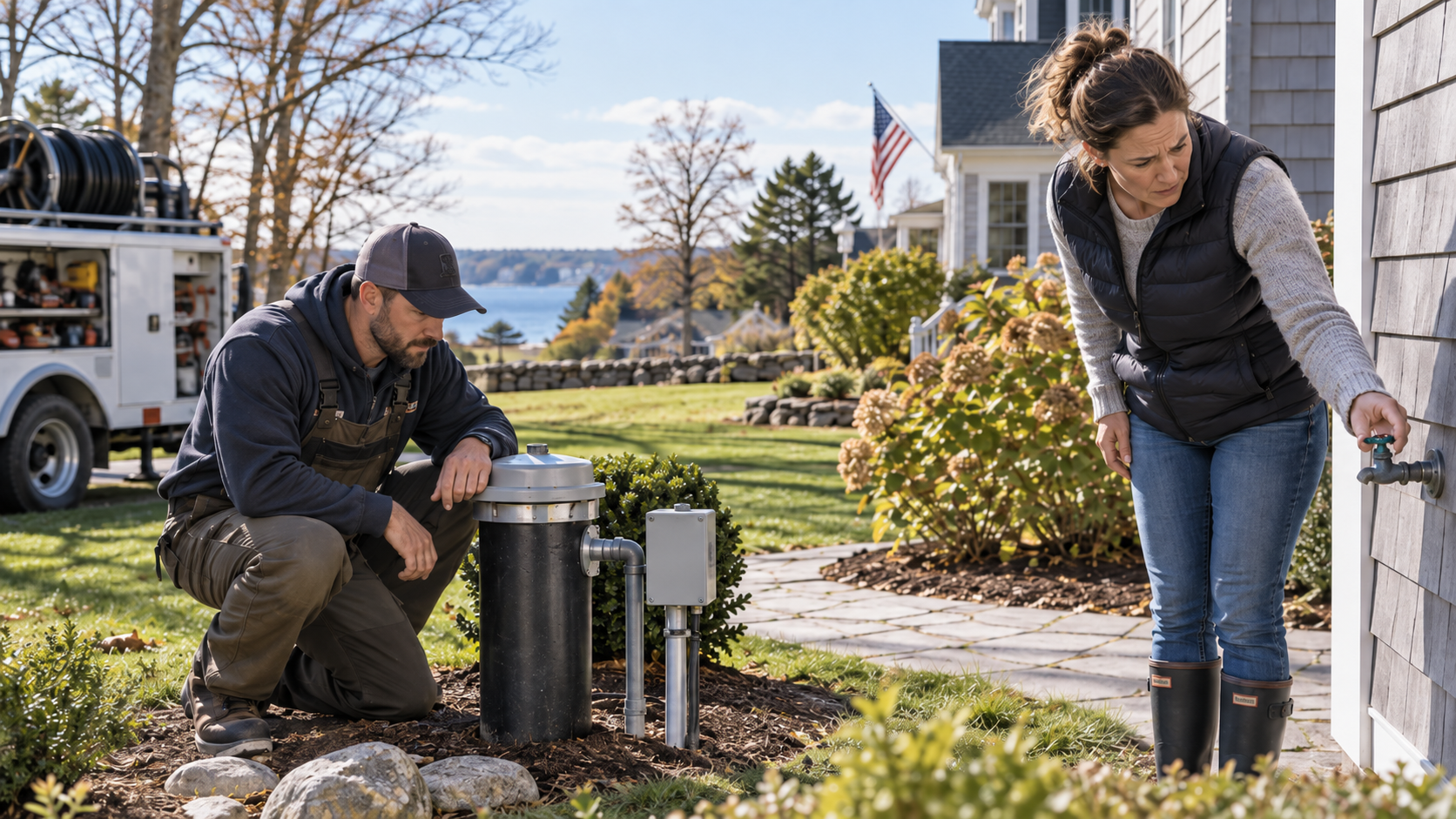
A real estate well inspection isn’t the same as a general home inspection — it should be performed by a licensed well contractor or pump specialist, not a generalist. A thorough inspection includes:
Mechanical Assessment
- Pump, pressure tank, electrical controls, switches, wiring
- Pressure consistency and cycling behavior
- Age and expected remaining life of components
Physical & Water Testing
- Wellhead, sanitary cap, and casing integrity
- Flow rate under sustained load (typically 30–90 min run)
- Independent lab samples for bacteria, nitrates, metals
Best Practices for a Smooth Closing
Whether buying or selling, a few habits keep the well from becoming a deal-breaker:
- Test early. Sellers should test before listing. Buyers should test during the contingency period, not after.
- Use certified labs and licensed specialists. Not a general home inspector, not a DIY kit for real estate purposes.
- Get the well log. If it can’t be found through the current owner, check with local health departments or the original drilling contractor.
- Disclose everything. Massachusetts has strict seller disclosure laws. Past treatment issues, filter systems, or known water quality quirks all belong in writing.
- Budget for ongoing care. No monthly water bill, but expect annual water tests, occasional equipment repairs, and potential filtration upgrades over time.
What About the Cost?
Well inspection and water testing costs vary based on the depth of testing panel you choose, the scope of the mechanical inspection, and your location in Massachusetts. Rather than quote figures that may not fit your situation, contact us and we’ll walk you through what a real estate transaction typically involves and give you an accurate estimate for your property.
Frequently Asked Questions
Do I need a special inspection when buying a home with a well?
What water tests should be run on a well before buying?
How far does a well have to be from a septic system in Massachusetts?
What does a Massachusetts town require to sell a home with a well?
How often should well water be tested?
What are the downsides of buying a home with a well?
How long do the well and pump last?