The simple rule for a residential septic tank is pumping every 3 to 5 years — but that’s an average, not a schedule. The right frequency depends on your household size, your tank capacity, how you use your plumbing, and (in Massachusetts) what Title 5 requires. Here’s what MA homeowners need to know.
The Simple Rule: Every 3 to 5 Years
Most residential septic tanks in Massachusetts should be pumped every 3 to 5 years. That’s the baseline every plumber, inspector, and public health office will quote you, and for the average 4-person household on a 1,000–1,500 gallon tank, it’s accurate.
But there’s wide variance. A single-person household on a 1,500-gallon tank can go far longer between pumpings, while a large family with a garbage disposal and daily laundry can fill the same tank in under two years. The table below shows the standard reference used by septic professionals:
Pumping Frequency by Household Size & Tank Size
| Household Size | 1,000-Gallon Tank | 1,250-Gallon Tank | 1,500-Gallon Tank |
|---|---|---|---|
| 1 person | 12 years | 16 years | 19 years |
| 2 people | 6 years | 8 years | 9 years |
| 3 people | 4 years | 5 years | 6 years |
| 4 people | 3 years | 4 years | 5 years |
| 5 people | 2 years | 3 years | 4 years |
| 6 people | 1.5 years | 2 years | 3 years |
These are guidelines based on average water use and normal plumbing habits. A number of factors can shorten the schedule considerably.
Factors That Shorten Your Pumping Schedule
Certain habits and system conditions make solids build up faster than the standard timeline predicts. If any of these apply to your home, plan on more frequent service:
Situations That Require Sooner Pumping
- Garbage disposal use. A disposal can increase the solid waste entering your tank by up to 50%. Frequent-use households should plan on pumping every 1 to 2 years.
- High water volume. Multiple laundry loads daily, long showers, or heavy dishwasher cycles don’t give solids time to settle out — they flush into the drainfield instead.
- Older or undersized tanks. Systems installed decades ago or sized for a smaller household need closer attention to avoid catastrophic failure.
- Harsh chemicals and antibacterial cleaners. Heavy household cleaners and antibacterial soaps kill the natural bacteria inside the tank that break down solids — leaving them to accumulate faster.
- Rental or vacation properties. Occupancy that spikes (weekend rentals, seasonal cottages) can overload systems that were sized for lighter, steady use.
Warning Signs Your Tank Needs Pumping Now
Even with a schedule, you shouldn’t wait if any of these signs appear. They mean the tank is either full or already backing up.
Signs You’ll Notice Inside the Home
- Slow drains. Sinks, tubs, and showers taking a long time to empty — especially when multiple fixtures are used at once.
- Gurgling pipes. Bubbling or gurgling from toilets or drains when the washing machine runs or the dishwasher empties.
- Sewage backups. Wastewater or foul-smelling sludge backing up out of your lowest drains — basement floor drains, showers, or toilets.
- Persistent indoor odors. Sewage smells inside the home, particularly near lower drains or plumbing vents.
Signs You’ll Notice Outside in the Yard
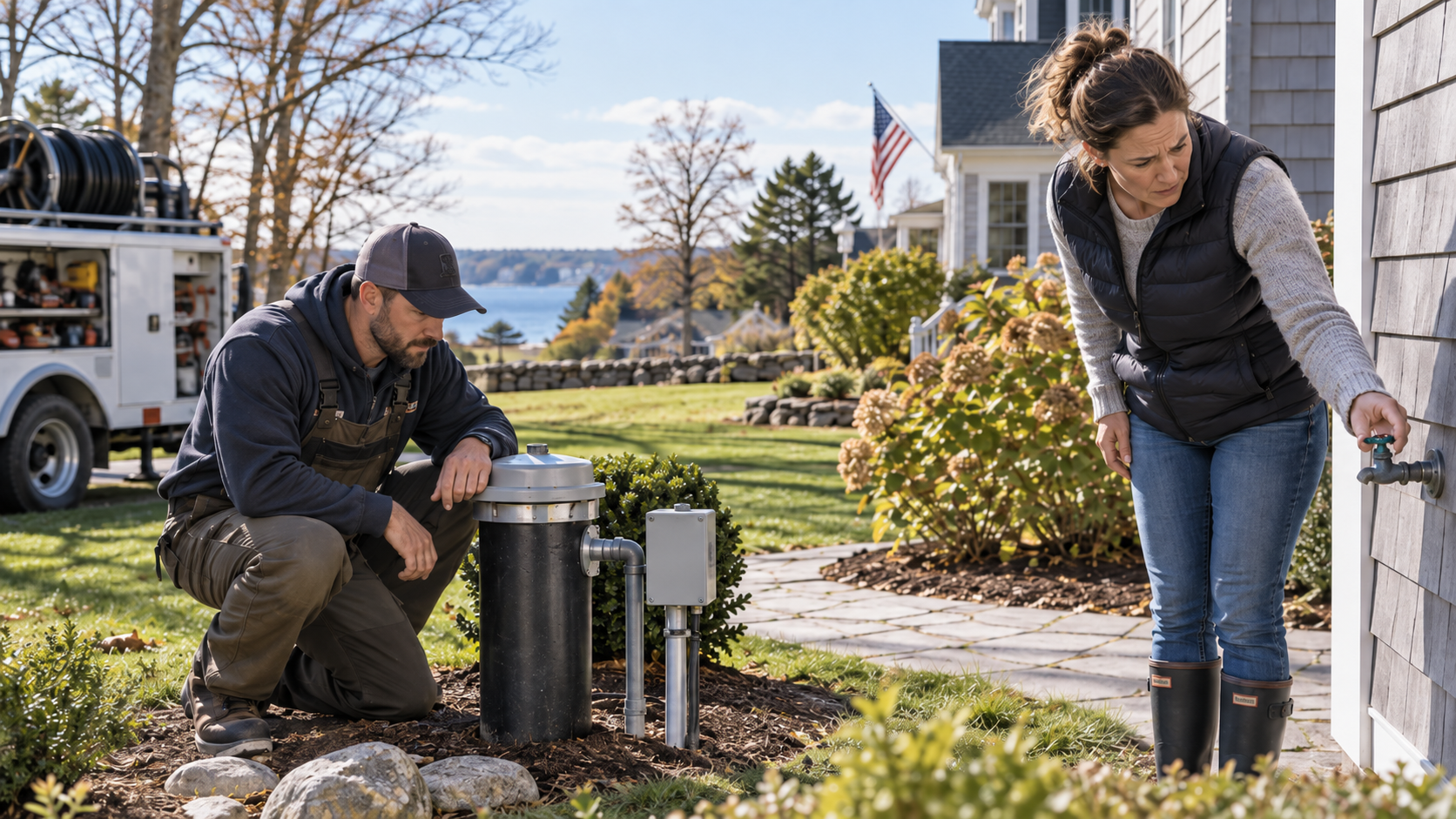
- Lush, vibrant green grass. The grass over your tank or drainfield looks noticeably greener, thicker, or healthier than the rest of the lawn — liquid waste is fertilizing it.
- Pooling water or soggy soil. Muddy patches, standing water, or spongy grass over the tank or drainfield — even when it hasn’t rained recently.
- Outdoor odors. Sulfur, rotten-egg, or raw sewage smells near the tank area or your home’s vent pipes.
- Insects near the field. Drain flies or unusual insect activity concentrated over the septic area.
Massachusetts Title 5: The 4-Times-a-Year Rule
Massachusetts homeowners face a specific regulation that’s worth knowing about — because it can change the value of your property. Title 5 of the Massachusetts State Environmental Code governs on-site sewage disposal, and it has a hard rule about pumping frequency.
Under Title 5, Pumping 4+ Times Per Year = System Failure
If your septic system needs to be pumped four or more times in a single year, Title 5 classifies it as a failed system. That triggers mandatory upgrade requirements at the next real estate transaction — and can affect what you can do with the property in the meantime.
The lesson: frequent pumping isn’t a maintenance strategy. It’s a warning sign that the drainfield, baffles, or absorption capacity has been compromised, and it needs professional evaluation before it becomes a Title 5 issue. If you’re pumping more than once a year, get a licensed inspector out to look at the whole system.
What Happens During a Professional Pumping
A standard septic pumping visit is a straightforward process, but it involves more than just emptying the tank. Here’s what to expect from a licensed pumper:
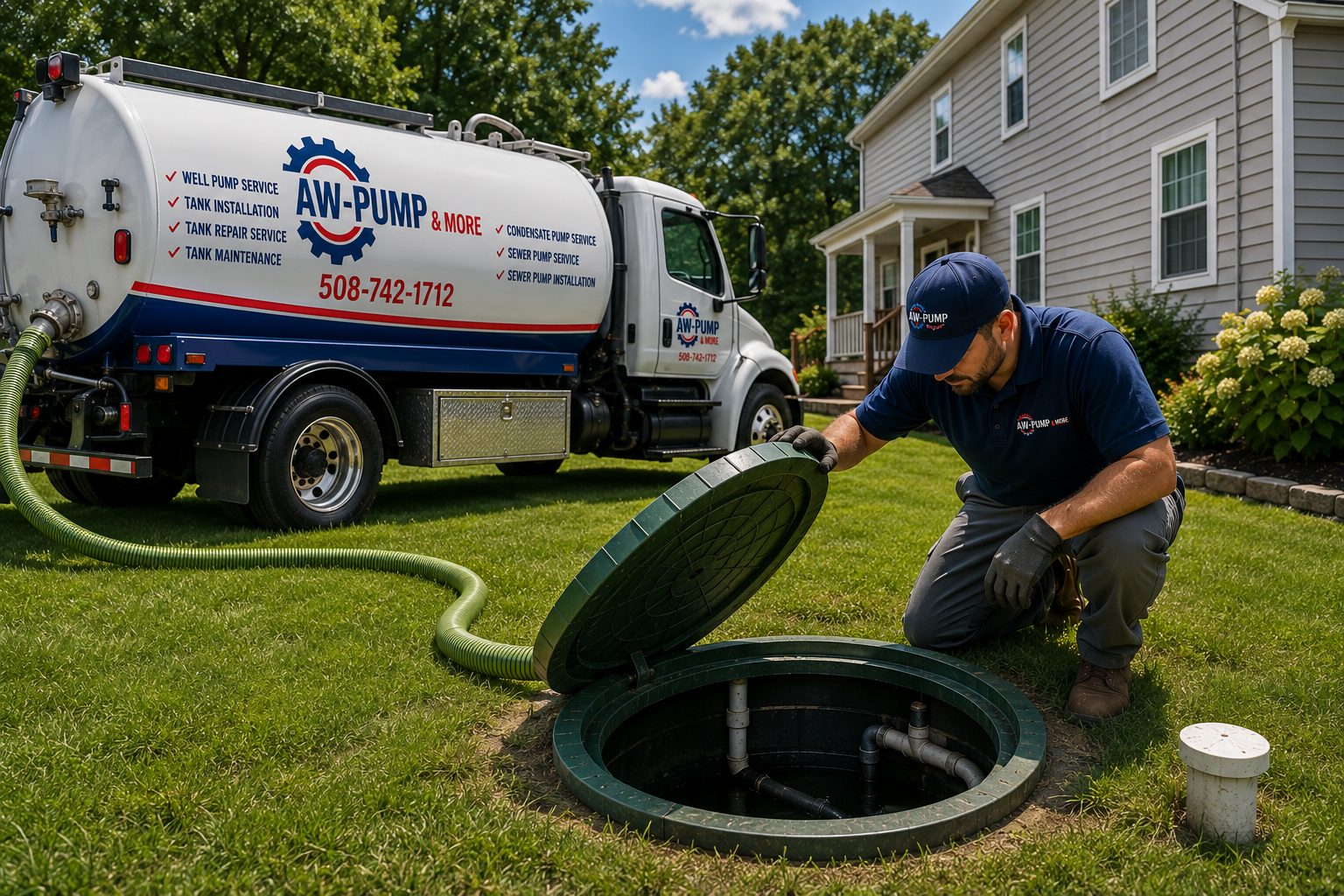
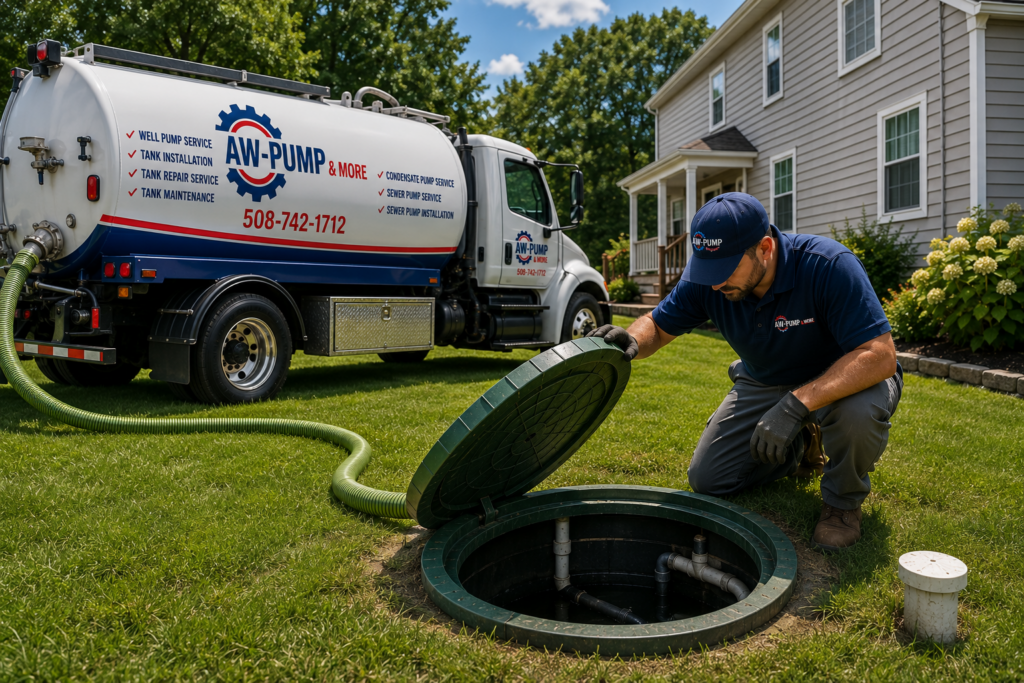
- Locating and accessing the lids. The technician finds the main access lids of your tank. If they’re buried, the crew will need to dig them out — something to factor into scheduling.
- Vacuum pumping. A large suction hose connected to a commercial vacuum truck pulls out both the liquid effluent and the heavy sludge sitting at the bottom of the tank.
- Cleaning the effluent filter. If your tank has an effluent filter (on the outlet pipe going to the drainfield), the tech should pull it out and rinse it. A clogged filter is one of the most common causes of backups.
- Visual inspection of the tank. Once empty, the tech checks the tank walls for cracks, verifies that the concrete or plastic baffles are intact, and confirms nothing is backflowing from the drainfield.
- Documentation. A reputable pumper leaves you with a written record of the service — useful for property records, Title 5 inspections, and future maintenance scheduling.
A Note on Pricing
Septic pumping costs depend on your tank size, how deep the lids are buried, whether an effluent filter needs cleaning, and your location in Massachusetts. Always ask for an all-inclusive quote before service begins — some companies advertise a low base price then add hidden fees for digging, disposal, or heavy-solids surcharges. For an accurate estimate on your property, contact us and we’ll walk you through what’s involved.
The Better Approach: Annual Inspections
Rather than guessing when your tank is due, the healthiest approach is annual inspection by a licensed technician. During inspection, they measure the sludge and scum layers inside the tank. The rule of thumb: when the sludge layer reaches one-third (33%) of the tank’s total volume, it’s time to pump — regardless of how many years have passed.
Annual inspection catches problems before they become emergencies, documents your maintenance for Title 5 purposes, and lets you plan pumping when it’s convenient rather than when the toilet stops flushing. For signs that inspection has become urgent, see our guide to signs your septic system is failing.
Frequently Asked Questions
How often should a septic tank be pumped in Massachusetts?
How do I know if my septic tank is full?
What happens if I don’t pump my septic tank on time?
Does using a garbage disposal require more frequent pumping?
Can I extend the time between pumpings?
What is included in a professional septic pumping?
How long does septic pumping take?