
Shallow & Deep Well Jet Pumps in Massachusetts
Above-ground jet pumps are still the right fit for thousands of Massachusetts wells. Learn how shallow and deep well jet pumps differ, how deep each can pull water, why they lose prime, and when a submersible is the better call. AW-Pump installs, services and replaces all three.
What a Jet Pump Is, and Who Still Needs One
A jet pump sits above ground, usually in a basement, crawlspace or pump house, and pulls water up from the well by suction. That one fact explains almost everything about it: how deep it can reach, why it has to be primed, why it is louder than a submersible, and why it is the easiest pump in the house to service.
Across Massachusetts, jet pumps are common on older homes, Cape and South Shore properties with shallow dug or driven wells, seasonal cottages, and any site where the water table sits close to the surface. When the pump is matched to the well, a jet system delivers steady household water for a decade or more. When it is mismatched, it loses prime, short-cycles and runs hot.
AW-Pump services every jet pump configuration in the state, and we will tell you plainly when a submersible would serve the property better.
Talk to a Pump Specialist
Shallow Well vs. Deep Well Jet Pumps
Both use the same motor, impeller and venturi principle. The difference is where the ejector sits and how many pipes run into the well, and that decides how deep each one can reach.
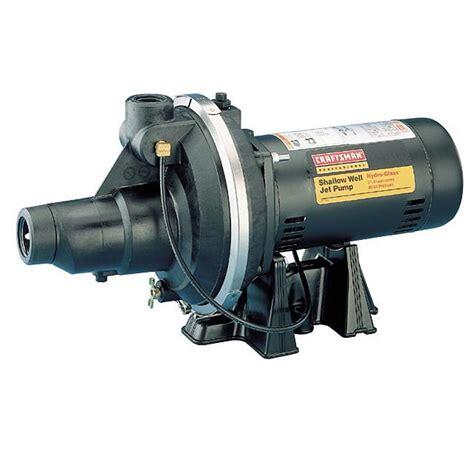
Shallow Well Jet Pump
One suction pipe runs from the pump down into the well. The nozzle and venturi are built right into the pump body above ground. Simpler, more efficient and easier to service, but limited by atmospheric pressure to about 25 feet of vertical lift from the water surface to the pump.
Best for: dug wells, driven point wells, and drilled wells where the pumping water level stays within 25 feet of the pump.
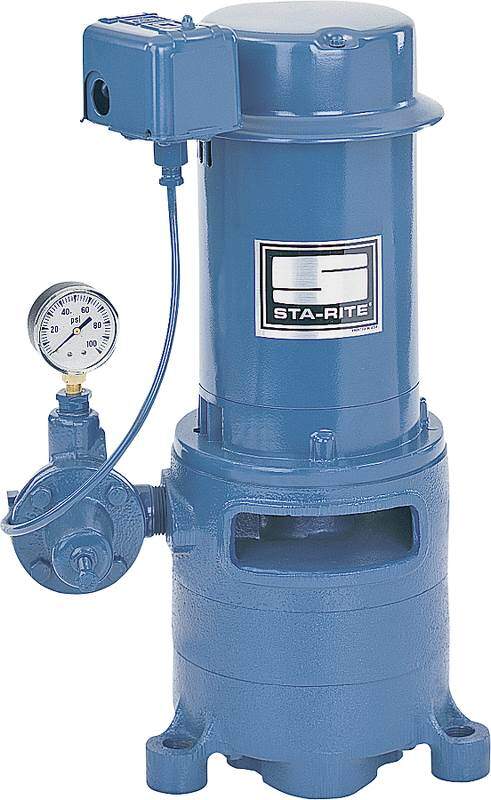
Deep Well Jet Pump
Two pipes run into the well. The drive pipe sends pressurized water down to an ejector assembly inside the casing, which creates the venturi boost at depth; the suction pipe carries the mixed water back up. That extra loop is what lets a deep well jet reach 50 to 90 feet, and heavy-duty models further.
Best for: drilled wells with a water level between 25 and roughly 90 feet, where an above-ground pump is still preferred for access or cost.
| Feature | Shallow Well Jet | Deep Well Jet | Submersible |
|---|---|---|---|
| Pump location | Above ground | Above ground, ejector in well | Inside the well, under water |
| Practical depth | Up to 25 ft | 25 to 90 ft (some to 120 ft) | 300 ft and beyond |
| Piping into well | One pipe | Two pipes | One drop pipe + wire |
| Needs priming | Yes | Yes | Never |
| Noise | Audible in basement | Audible in basement | Silent |
| Energy efficiency | Moderate | Lower (powers the ejector) | Highest |
| Service access | Easiest | Easy (pump), ejector needs pulling | Pump must be pulled |
| Freeze exposure | Yes, if poorly insulated | Yes, if poorly insulated | Minimal |
How a Jet Pump Lifts Water
A jet pump combines a centrifugal impeller with the venturi effect. Part of the water it moves is recirculated through a narrow nozzle to create suction, which is why a jet pump can pull water it cannot physically reach with the impeller alone.
- Centrifugal pushThe motor spins an impeller that pushes water through the pump body and toward the house.
- Nozzle accelerationA portion of that pressurized water is diverted back through a narrow nozzle, which speeds it up sharply.
- Venturi vacuumThe fast stream shoots into a flared venturi tube. Its pressure drops, creating a low-pressure zone.
- Suction liftThat vacuum draws fresh well water up the suction pipe, mixes it with the drive stream, and sends it on to the pressure tank.
On a shallow well pump, steps 2 through 4 happen inside the pump housing. On a deep well pump, they happen in the ejector down in the well, which is why it needs the second pipe and more motor power.
Not sure which jet pump your well needs?
We measure your pumping water level and size the pump to the well, not the other way around.
When to Keep a Jet Pump, and When to Convert
Submersibles push water from inside the well, never lose prime, run silent and reach far deeper. Jet pumps win on upfront cost, serviceability and shallow-well fit. Here is how we make the call on a Massachusetts property.
- Keep the jet pump whenThe water level is comfortably within range, the pump is under 10 years old, the basement stays above freezing, and you value being able to service it yourself without pulling equipment from the well.
- Convert to submersible whenThe water level has dropped below the jet's reach, the pump keeps losing prime after the suction line and foot valve check out, noise is a problem, or you are already replacing the pump and want 15-plus years of quiet, efficient service.
- What a conversion involvesA new submersible pump and motor, drop pipe, pitless adapter, wiring down the casing, and pressure tank adjustments. It is a bigger job than a jet swap, and every one is quoted after we inspect the well.
- Constant pressure upgradeIf you are converting anyway, this is the moment to add a variable-speed controller. See our constant pressure systems page for how that works.
Four Jet Pump Problems We See Most in Massachusetts
Jet pumps have a short list of failure modes, and our climate and groundwater make a few of them more likely than the manuals suggest.
Lost Prime
The pump runs but moves no water. Air got into the suction side or water drained back down the well.
- Foot valve or check valve: a worn one-way valve at the bottom of the well lets water fall back when the pump stops.
- Suction line air leak: loose fittings or a cracked pipe draw air in under vacuum. These rarely leak water outward, so they hide.
- Low water level: drought or heavy use drops the water below the intake and the pump pulls air.
- Never run it dry: more than about 30 to 60 seconds without water can destroy the mechanical seal.
Winter Freezing
An above-ground pump in an unheated space is the most freeze-exposed part of a Massachusetts well system.
- Pump houses and crawlspaces: a cracked pump housing or split suction line after a cold snap is a common spring service call.
- Seasonal properties: jet systems on Cape and lakefront cottages should be drained and winterized, not just shut off.
- Insulation and heat: a small heat source or insulated enclosure prevents most of it.
Iron, Sediment and Hard Water
Massachusetts bedrock and shallow sand-and-gravel wells both carry minerals that wear jet components.
- Nozzle and venturi: iron scale narrows the jet passages and cuts flow. Cleaning or replacing the ejector restores it.
- Impeller wear: sand and grit erode the impeller over time, which shows up as falling pressure.
- Pressure switch nipple: iron mud plugs the small tube feeding the switch, so the pump never gets the signal to start.
Seasonal Water Table Drop
A shallow well pump that worked all spring can run out of reach by late summer.
- The 25-foot ceiling is measured to the water, not the bottom of the well. When the pumping level drops below that, the pump cannot pull.
- Sputtering and air at the taps are the early warning.
- Options: convert to a deep well jet, lower a deep well ejector, or move to a submersible. We measure static and pumping levels before recommending any of them.
Having a broader problem with pressure or flow? See our guide to common well pump problems for the full diagnostic checklist.
Trusted Brands We Install & Service
We install and service jet pumps, submersibles, tanks and controls from the industry’s most trusted manufacturers, built for long-term reliability.




Jet Pump Questions
What is the difference between a shallow well and a deep well jet pump?
How deep can a jet pump pull water?
Why does a deep well jet pump have two pipes?
Why does my jet pump keep losing prime?
How do I prime a jet pump?
What are the disadvantages of a jet pump?
How long does a jet pump last?
Can I replace my jet pump with a submersible?
Jet Pump Service, Replacement & Conversion
AW-Pump & More installs and services shallow well, deep well and submersible pump systems across Massachusetts. Reach out and we’ll get back to you quickly.
(508) 742-1712- Licensed & insured, certified technicians on every call
- Shallow, deep well and submersible, we service all three configurations
- We measure before we recommend, static and pumping water levels on every quote
- Free quote, every job is priced after inspection, never from a chart
Serving:
Reach Out Today
Send us a message or give us a call, we’ll get back to you really soon.